Move the lift underwater
Hydrofoils are older than most board sports. Enrico Forlanini tested a foil-borne boat on Lake Maggiore in Italy in the early 1900s, and foils have lifted ferries and racing yachts ever since. Their arrival in surfing came through big-wave riders: Laird Hamilton, Dave Kalama and friends experimented with foil boards at Pe'ahi on Maui around the turn of the millennium. Kitesurfers adopted foils next, and kite foiling became an Olympic event for the Paris 2024 Games, sailed off Marseille. Wing foiling, using a handheld inflatable wing, spread rapidly from around 2019.
The appeal is easy to feel. Once the board rises, drag drops dramatically. A small swell that would barely push a longboard can carry a foil rider for a long distance, and a well-timed pump can link one bump of energy to the next.
The parts and the joints that matter
A foil has four main parts: the mast, which drops vertically from the board; the fuselage, a horizontal bar at the bottom; the front wing, which produces most of the lift; and the rear stabiliser, which keeps pitch under control. Each connection is a point of strength and a point of care. The board usually attaches through a deep track box or a plate mount with stainless bolts, and the mast attaches to the fuselage with further bolts or a tapered connection.
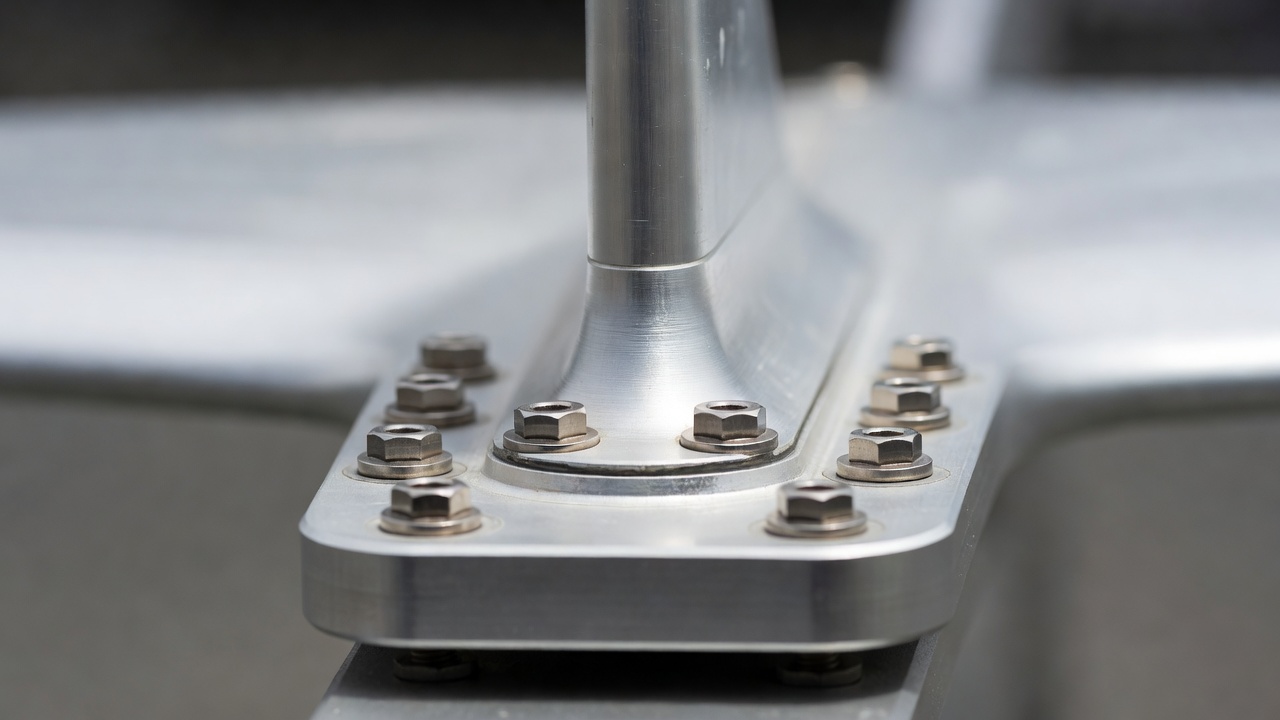
Aluminium masts are affordable and robust; carbon masts are stiffer and lighter but more expensive and more vulnerable to impact. Where stainless steel meets aluminium in salt water, galvanic corrosion can seize bolts. Manufacturers typically recommend rinsing in fresh water, separating parts between sessions and applying a protective grease to threads.
Balance in a new dimension
On a normal board you balance side to side and nose to tail on the surface. On a foil you also manage height. Lean forward and the foil dives; lean back and it climbs until it breaches the surface and drops you. The front wing's size and shape decide how forgiving this is. Large, broad, low-aspect wings lift early at low speed and feel steady. Narrow, high-aspect wings glide farther and pump more efficiently but demand more speed and finer control.
| Front wing type | Feels like | Good for | Trade-off |
|---|---|---|---|
| Large, low aspect | Early lift, steady pitch | First flights, slow speeds | More drag, slower top speed |
| Mid aspect | Balanced, predictable | Progressing riders | Jack of all trades |
| Narrow, high aspect | Long glide, efficient pumping | Downwinders, linking swells | Needs speed, less forgiving in turns |
The learning curve, honestly
Most riders spend their first sessions crashing. Short masts help, because a shorter fall is less dramatic. Learning behind a boat or jet ski on a tow rope, or on an electric foil with a calm instructor, isolates the balance skill from paddling and wave reading. Electric foils, established commercially by companies such as Lift Foils and Fliteboard in the late 2010s, provide constant speed and can shorten the path to a first stable flight. They are also expensive, heavy, and powered by lithium batteries far beyond what airlines usually allow in passenger luggage, so portability is limited.
Established products and experimental ideas
Prone surf foils, wing foils, kite foils, tow foils and electric foils are all established categories with spare parts, schools and second-hand markets. Experimental ideas include foils with sensor-driven adjustable flaps that try to stabilise height automatically, folding masts for travel and printed titanium components. Some are promising. Few have the long-term reliability record that you would want before trusting them far from shore.
Sharing the water safely
A foil is a set of thin, sometimes sharp wings travelling at speed. Many schools recommend a helmet and an impact vest while learning, protective covers on wing edges during transport, and a generous gap from swimmers and other surfers. Avoid crowded peaks entirely until you can control your board and stop where you choose. The most considerate foil riders tend to use the gaps that others cannot ride: wind swell, open bays and the soft shoulders that waves leave behind.