Feedback, not features
The design decision behind most smart accessories is to measure the session. Position, speed, heart rate, water temperature and wave count are all available from devices small enough to wear. The consequences ripple outwards: something now needs charging, sealing and updating, and something now competes for your attention in an environment where attention keeps you safe. We judge each category by a simple test: does it change a decision you would make on or before the water?
- Watches and session trackersestablished
Multisport watches from brands such as Garmin and Apple's water-rated Ultra models track surf sessions, speed and distance via GPS.
- Forecasts and surf camerasestablished
Services such as Surfline combine swell models, buoy data and live cameras, changing when and where riders go.
- Wireless controllersestablished
Handheld and wrist remotes control electric boards and foils, usually with a cut-off if you let go or fall.
- Personal locator beaconsestablished
Registered beacons alert rescue services through the international Cospas-Sarsat satellite system.
- Sensor fins and citizen scienceresearch
The Smartfin project, linked with Scripps Institution of Oceanography, fits sensors into fins to log coastal water data.
Watches and trackers: useful for the curious
Session data helps riders who enjoy seeing progress over time: how many waves they caught, how long their rides were, how far they paddled. For foilers and downwind paddlers, live speed and distance can guide equipment choices and pacing. For a relaxed weekend surfer, the value is lower. Trackers rely on GPS, which works poorly while submerged, so wave counts and distances are estimates rather than exact records. Battery life, strap security and the temptation to check a screen mid-set are the costs.
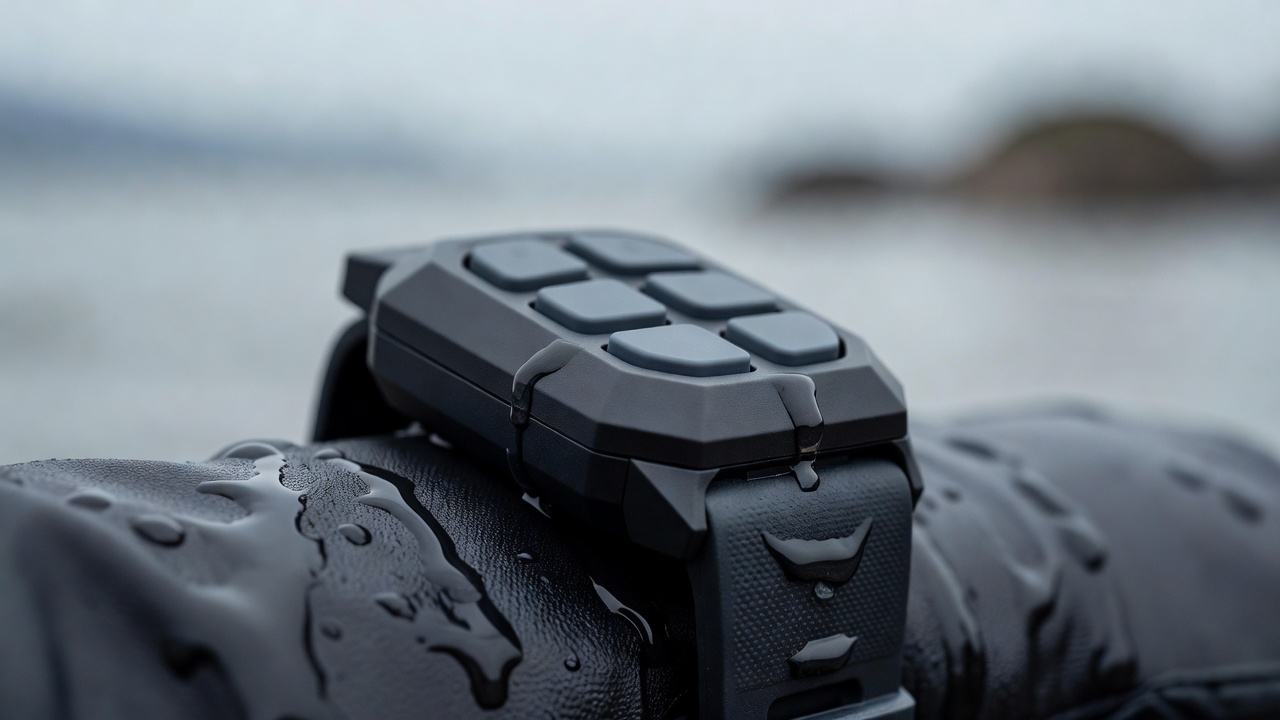
Controllers for powered boards
On electric foils and motorised boards, the controller is a safety device as much as a throttle. Good designs are fully waterproof, float, work with cold hands and stop the motor immediately when connection is lost or the trigger is released. Before buying, ask how the remote is charged, whether spare remotes are available, and what happens if the battery in the remote runs flat mid-session.
Safety electronics
Personal locator beacons and waterproof marine radios add genuine value for downwinders, long-distance paddlers and anyone riding far from shore or alone. They are also the category where cheap shortcuts are dangerous. Register a beacon in the country where it is required, carry it where you can reach it, and do not treat it as a substitute for telling someone your plan. Some riders also use phone-based tracking in a waterproof pouch, which works well near the coast but depends on mobile coverage.
Research sensors and experiments
Sensor fins, smart leashes that detect a fall, cameras that automatically follow a rider and boards with built-in pressure sensors all exist in some form. Several are research tools or small production runs. Treat them as experiments: fun and occasionally valuable, but likely to change, lose support or need workarounds. Projects that share data with ocean scientists add a public benefit that many riders find worthwhile in itself.
| Accessory | What it adds | What it asks | Best for |
|---|---|---|---|
| GPS watch | Session stats, speed, distance | Charging, attention, cost | Data-minded riders, foilers |
| Forecast app and cams | Better timing and spot choice | Subscription, screen time on land | Nearly everyone |
| Wireless controller | Control and automatic cut-off | Spare batteries, careful sealing | Electric board riders |
| Personal locator beacon | Rescue alert in emergencies | Registration, battery checks | Remote and solo sessions |
| Sensor fin | Shared ocean data | Syncing, uncertain longevity | Curious, science-minded riders |
The hidden costs: salt, power and privacy
Salt water finds every weak seal. Rinse devices in fresh water, check charging ports for corrosion and replace worn straps before they fail. Lithium batteries dislike heat, so avoid leaving them in a hot car. Finally, location and health data are personal. Read what each app stores and shares, switch off public sharing of your favourite quiet spot if you want it to stay quiet, and remember that the most valuable thing you bring into the water is still your own attention.